The heart of this site
What is a songcarrier?
A songcarrier is someone who receives a song, holds it with care, and passes it on. The songs aren't ours. We carry them for a while, sing them in good faith, and hand them to the next voice along with their story and where they came from.
The oral tradition
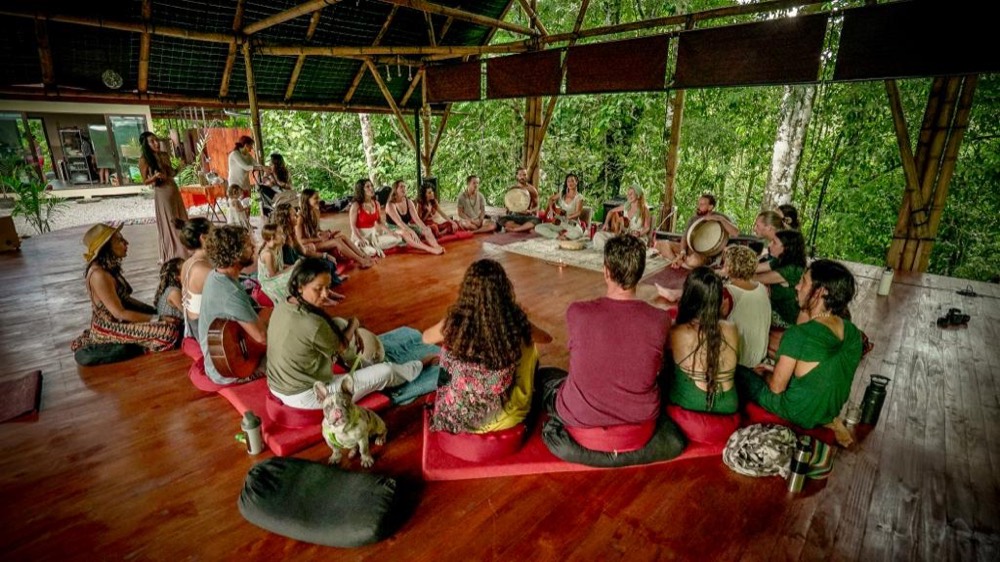
Most of the songs in this book were never learned from a page. They travelled voice to voice: around fires, in kirtan halls, at ceremonies, retreats and yoga circles. Someone sings a line, the circle sings it back, and the song lives in everyone who was there. That is the oral tradition, and it's how songs have moved between people for as long as there have been people.
In an oral tradition a song changes a little as it travels. Words shift, melodies settle into new shapes, a verse gets added in another language. That is part of its life. What a songcarrier protects is the thread back to the source: who wrote it, which tradition or people it belongs to, and what it means to them.
Tradition, and what it asks of us
A traditional song or mantra has no single author. It belongs to a lineage, a culture or a people, and it carries their prayers. Singing one is an honour, and it comes with a few simple responsibilities: learn what the words mean, say them with care, name where the song comes from, and keep sacred songs in settings that respect them.
Many of the newer songs here are written by living songwriters who wrote them for circles. Carrying their songs means crediting them, pointing people to their music, and asking before you record or sell their work.
The Songcarrier’s Code
Sharing sacred music with integrity, respect and love
This songbook is a devotional offering, a weaving of melodies, mantras, and heart songs that have been passed on through oral tradition, ceremonies, yoga circles, and sacred spaces around the world.
Many of these songs are rooted in indigenous, yogic, and spiritual lineages. They are part of living traditions that deserve reverence, reciprocity, and right relationship.
Wherever possible, I’ve credited the original songwriters, teachers, and traditions. If you see a song missing attribution or feel one needs deeper cultural context, please let me know. I am always learning, and I welcome your input with an open heart.
If you are sharing these songs…
- Respect the source.Always honour the origin of a song as much as possible, whether it’s a specific artist, lineage, or culture. Name them when you share, and speak of them with gratitude.
- Slow down and listen first.Before singing a new song, ask: Where did this come from? Is this mine to sing? Am I in relationship with this music and the people it belongs to?
- Seek permission where needed.For original compositions (not in public domain), please get permission before recording or using in monetized spaces (albums, online courses, etc.).
- Use for good, not gain.These songs are shared for personal and educational use, song circles, classes, and heartfelt offerings. Not for resale or unauthorized commercial use.
- Reciprocity matters.If a song has moved you, consider supporting the artist or tradition it came from through donations, acknowledgment, or spreading awareness.
Together, we commit to doing our best to honour this global tapestry of music with care, consent, and connection. May we continue to carry and share these songs in a good way, so the voice of the Earth, Spirit and Soul may be heard far and wide.
Leading a song circle
Holding space through song is a sacred art. Whether you’re leading in a retreat, ceremony, yoga class, or casual gathering, here are a few guidelines to support an uplifting and inclusive experience. Remember: your authenticity and presence are more important than musical perfection.
- Before the circle.Set the energy: light a candle, burn incense, or open with a moment of silence or grounding breath. Know your songs and choose keys that are comfortable for the group. Tune in by singing for yourself first, so your own voice drops in before you lead others.
- During the circle.Call and response works wonders: teach the song one section at a time, slow it down, repeat until the group feels confident. Encourage participation, not perfection. Let repetition do the work; chanting a line several times creates safety, resonance and depth.
- After the songs.Offer integration time: pause, breathe, let it land. Close with gratitude to the group, the tradition, the land and the spirit of the music. Stay humble and open; every circle is a co-creation.
Francie trains facilitators to hold song circles with confidence and care.